
Sennheiser MKE 600 Shotgun Microphone Bundle
4.7Editor score
High-directivity camera microphone
Switchable low-cut filter
Phantom or battery power
Our Boom Mic for Filmmaking guide compares 10 leading shotgun microphones for dialogue, interviews, ENG, outdoor production, and flexible on-camera audio
A boom mic for filmmaking gives productions a practical way to capture focused dialogue, interviews, ambient sound, and location audio. The right microphone balances directivity, noise control, power options, mounting flexibility, and the ability to work with your camera or audio mixer without adding unnecessary complexity.
This guide compares ten shotgun microphone listings, including complete boom-pole kits, compact on-camera models, and professional XLR microphones. We evaluated the supplied specifications, included accessories, connection methods, directional patterns, power options, filters, shock-mounting features, and intended uses to help filmmakers identify a suitable setup.
Each review shows which production situations the microphone is best suited to, along with its key strengths and trade-offs. Three top picks highlight strong options for different priorities, while the remaining entries provide practical alternatives. Product availability and prices can change, so confirm the current listing and complete kit contents before purchasing.
4.7Editor score

4.1Editor score

4.4Editor score
This side-by-side comparison covers the supplied microphone specifications, power systems, connection methods, directional characteristics, and included accessories, making it easier to match a microphone to a camera, boom operator, field kit, or filmmaking budget.




The Movo XLR Shotgun Microphone & Boom Pole Kit is an all-in-one option for filmmakers who want the microphone, pole, mounting hardware, and wind protection in a single purchase. Its standout feature is the 9.8-foot telescoping boom pole, which gives an operator much more placement latitude than a conventional camera-mounted microphone. The included shotgun microphone uses a supercardioid pattern to emphasize sound directly in front while reducing unwanted sound from the sides.
We may earn a commission when you buy through this link, at no additional cost to you.
The integrated internal XLR cable is especially useful because it reduces the need to route and secure a separate cable along the boom. That can simplify setup and make the kit more practical for solo creators, documentary teams, and ENG-style work. The package also includes a foam windscreen, furry windscreen, and shock mount, covering several common location-recording needs without requiring separate accessory purchases.
A boom microphone introduces a different set of demands from an on-camera mic. Its directional performance can change as the angle between the subject and microphone changes, and handling noise or poor placement can undermine the otherwise focused sound. The pole's telescopic locks must be checked for stability, while the operator should keep the microphone out of direct airflow and maintain a consistent distance from the speaker.
This kit is most appropriate for filmmakers who want a recognizable boom setup without assembling every component individually. It is also a logical choice for interviews, narrative scenes, documentaries, field recordings, and YouTube productions that benefit from overhead or off-axis placement. Buyers should confirm that their camera, field recorder, or mixer accepts a standard XLR microphone and can supply the required operating power.
The 9.8-foot telescoping pole allows the operator to place the directional microphone above, beside, or just outside the frame. This is useful when camera position is fixed, when a subject moves, or when a director wants a recording angle that cannot be obtained from the camera itself.
Because the XLR cable is integrated into the pole, the rig can look and operate more cleanly than a microphone fitted with a separate cable. Users still need to inspect the internal connection and secure the lower end where it enters the recording device.
We may earn a commission when you buy through this link, at no additional cost to you.
This Sennheiser MKE 600 bundle combines a highly directional shotgun microphone with a universal shockmount, a 20-foot XLR cable, and a cleaning cloth. The microphone is designed to pick up sound from the direction in which the camera points while attenuating noise arriving from the sides and rear. That makes it appropriate for dialogue, interviews, and demanding video-camera recording situations where environmental sound is less desirable.
We may earn a commission when you buy through this link, at no additional cost to you.
A major advantage is the choice between phantom power and battery power. This is helpful for camera operators because some camcorders and DSLRs do not provide phantom power to an attached microphone. The switchable low-cut filter is another practical feature, giving the user a way to reduce low-frequency wind noise and rumble when conditions call for it. The universal shockmount expands placement options across camera shoes and boom poles.
The included 20-foot XLR cable can be useful when the microphone is mounted on a pole or positioned away from the camera, although it requires careful routing to avoid tangles and accidental pulls. As with any highly directional microphone, placement angle is critical. A source that moves outside the front pickup area can become quieter or sound different, so actors and interviewers should maintain a consistent position.
This bundle is a strong choice for filmmakers who want the MKE 600 alongside the principal accessories needed for camera or pole operation. It is especially relevant for ENG, interviews, documentary work, and productions using a mixer or field recorder. Confirm camera connection requirements and power behavior before the shoot so the correct cable and power method are ready.
Phantom power and battery operation make the microphone adaptable to different camera systems. The available power method should be confirmed against the camera or recorder being used, particularly when the microphone will be carried on a long boom pole.
The universal shockmount and long XLR cable cover two essential parts of a boom setup. They do not include the pole itself, so filmmakers needing a full overhead rig should account for that additional component.
We may earn a commission when you buy through this link, at no additional cost to you.
The Sennheiser MKE 600 is a compact shotgun microphone intended for camcorders and video DSLRs. Its defining strengths are high directivity, a switchable low-cut filter, and the ability to operate from phantom power or a battery. The supplied Auray universal shockmount and windshield make the package practical for camera-shoe installation and help isolate the microphone from handling and camera vibration.
We may earn a commission when you buy through this link, at no additional cost to you.
The low-battery indicator provides useful information when the microphone is operating on battery power. This is particularly helpful during location work, where a depleted battery could interrupt a take. The ability to use either power method also allows the microphone to fit different recording environments, including cameras that lack phantom-power output and separate recorders that provide it.
Its compact size and low weight make it easier to keep close to the camera than many larger broadcast shotgun microphones. The trade-off is that compactness does not replace boom-pole flexibility. A filmmaker who needs extended reach will still need a compatible pole, appropriate cable, and an operator able to maintain consistent microphone placement.
This listing is a good option for documentary makers, journalists, interview crews, and filmmakers who want a dedicated directional microphone rather than a general-purpose recorder microphone. It is particularly suitable when the subject stays aligned with the camera. For productions requiring substantial off-axis reach, the microphone can also serve as the microphone end of a separately assembled boom rig.
The MKE 600 concentrates its pickup toward the front and attenuates sound from the sides and rear. This helps when a camera points toward a subject amid environmental noise, although moving subjects require careful framing and mic-angle control.
Phantom power and battery operation cover two common camera-recording configurations. The battery indicator helps users avoid unexpected shutdowns, while the choice of power method broadens compatibility with field recorders and cameras.
We may earn a commission when you buy through this link, at no additional cost to you.
The BOYA BY-BM6060 is an XLR shotgun condenser microphone designed for video production, ENG and EFP work, interviews, independent films, television, and documentaries. Its super-cardioid pattern focuses on the intended source while resisting off-axis sound, and the supplied specifications also emphasize low-noise circuitry. The microphone is designed for 24-48V phantom power but can use one AA battery when the connected device does not provide phantom power.
We may earn a commission when you buy through this link, at no additional cost to you.
The kit includes a suspension shock mount, furry windshield, and foam windshield. Those accessories are important in practical filmmaking because even a well-aimed microphone can produce unwanted low-frequency movement noise or wind contamination. The cold-shoe mount with a 1/4-inch thread provides additional mounting flexibility for a camera, stand, or suitable boom assembly.
Its XLR connection and dual power options make it broader than a basic consumer camera microphone, but it is not a complete boom rig. Users will need an appropriate XLR cable and either a camera with XLR input, a field recorder, or an audio mixer. A boom pole is also not listed among the included accessories, so budget planning should include the total system rather than the microphone alone.
The BY-BM6060 is best suited to creators who want professional-style connectivity and directional recording without committing to a larger complete boom package. It is useful for interviews, narrative dialogue, outdoor recordings, and production audio acquired with ENG or EFP equipment. Its included mounts and windscreens make it a versatile starting point for a compact or camera-based field kit.
A standard three-pin XLR output and support for 24-48V phantom power let the microphone fit many professional-style recording arrangements. The single AA battery option provides a fallback when a connected device cannot supply phantom power.
The supplied foam and furry windscreens help protect the microphone in outdoor conditions. Wind protection still needs to be fitted correctly, and operators should avoid positioning the microphone directly in a strong airflow when possible.
We may earn a commission when you buy through this link, at no additional cost to you.
This second Movo listing offers the same general concept as the higher-ranked bundle: a shotgun microphone paired with a 9.8-foot telescoping boom pole, an internal XLR cable, a foam windscreen, a furry windscreen, and a shock mount. It targets filmmakers, documentarians, YouTube creators, and ENG or broadcast crews that need more placement reach than a camera-mounted microphone offers.
We may earn a commission when you buy through this link, at no additional cost to you.
The collapsible pole is convenient for transport and storage, while the integrated cable helps prevent a separate microphone cable from hanging loosely beneath the boom. The supercardioid microphone is intended to isolate voices and frontal sound sources, which is useful for dialogue recorded in a moderately noisy location. These features make the package conceptually accessible for new boom operators.
Its rating is lower than those of the other products in this guide, so buyers should pay particular attention to current customer feedback and the details of the listing. A complete bundle can contain everything needed for a basic boom arrangement, but it does not remove the operator's responsibility to control placement angle, maintain a consistent distance from the subject, and monitor the recording level.
This kit makes sense for creators who specifically want the convenience of an integrated pole-and-microphone system and value portability. It is less suitable for someone who already owns a compatible boom pole, a preferred microphone, or a camera-specific rig. Confirm the kit contents, connector type, and power requirements before ordering, especially if the production depends on flawless continuity between multiple takes.
The telescoping pole collapses for storage and transport, making it practical for crews that move between locations. A compact packed size also helps when a production kit must fit into a vehicle or carry case alongside cameras, batteries, and recording gear.
The supercardioid pattern is useful for focusing on a nearby voice, but the result depends heavily on angle and distance. The boom operator should follow the speaker and keep the microphone consistently positioned as framing and performance change.
We may earn a commission when you buy through this link, at no additional cost to you.
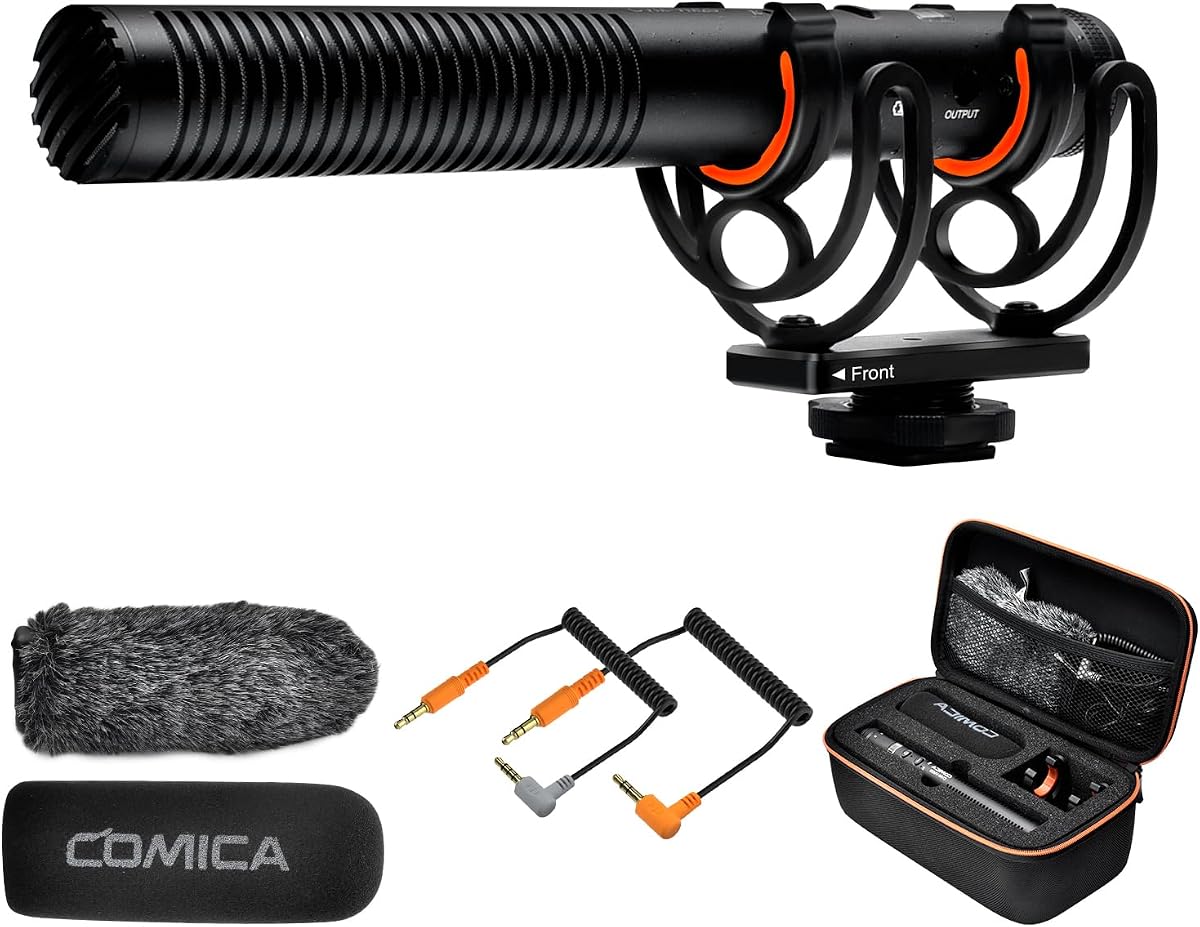
The COMICA VM20 is a super-cardioid shotgun condenser microphone designed for cameras, camcorders, iPhones, and Android devices. It is a practical alternative for filmmakers who want more on-camera control than a basic fixed microphone offers. The included 3.5mm TRS and TRRS cables support many common camera and mobile-device connections, although a USB-C phone adapter is not included.
We may earn a commission when you buy through this link, at no additional cost to you.
Two low-cut settings, 75Hz and 150Hz, help reduce unwanted low-frequency noise, while a ten-level gain adjustment offers sensitivity control from -43dB to -23dB. The built-in rechargeable battery is rated for up to 60 hours of standby time, and the OLED display provides a real-time view of remaining power. USB-C charging while in use gives creators added flexibility during extended sessions.
The included Rycote-style shock mount is designed to reduce vibration and shaking during motion shots. Its front and rear positions can be adjusted, which is helpful when changing the microphone's relationship to the camera. Unlike the XLR-focused products in this guide, however, the VM20 is principally an on-camera and mobile-oriented solution rather than a dedicated professional boom output.
This microphone is best for vloggers, filmmakers, interviewers, product reviewers, and online creators working across camera and phone systems. It can also provide directional sound in a small documentary setup where a simpler 3.5mm connection is preferable to XLR. Users should verify the exact input on their recording device and bring any necessary phone adapter.
The ten-level gain control and two low-cut options let users adapt the microphone to source levels and background rumble. Starting conservatively and monitoring the result is preferable to assuming a fixed setting will suit every environment.
The OLED display makes remaining power easier to check before a critical take. With USB-C charging while operating, the microphone can remain in service during longer recording sessions without requiring a complete shutdown for charging.
We may earn a commission when you buy through this link, at no additional cost to you.
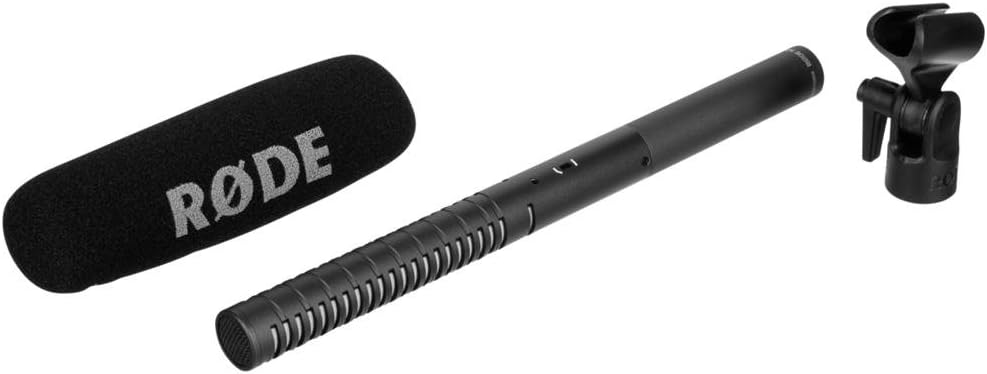
The Rode NTG-2 is a lightweight, highly directional shotgun microphone designed to offer flexible operation for location recording. It can run from 48V phantom power or an AA battery, allowing it to work with different cameras, mixers, and field recorders. Its low-noise design and full frequency response make it a broadly applicable option for film, documentary, interview, and broadcast production.
We may earn a commission when you buy through this link, at no additional cost to you.
The switchable 80Hz high-pass filter gives the user a method for reducing low-frequency rumble, which can be useful in vehicles, on busy streets, or around handling vibration. The microphone's relatively compact and lightweight format also makes it easier to mount on a camera, stand, or boom pole without creating an excessively large assembly.
The listing does not indicate that a boom pole, shock mount, windshield, or cable is included, so those items may need separate consideration. Users should also remember that the directional pattern narrows the area from which sound is accepted. If the subject moves significantly, the operator must follow the performance or adjust the microphone angle to maintain consistent level and tonal character.
The NTG-2 is a sensible choice for filmmakers who want a multi-powered XLR microphone with a familiar professional workflow. It can serve as a camera-mounted directional mic, a stand-mounted interview mic, or the microphone at the end of a boom assembly. Matching it to the right mount, cable, and wind protection will produce a more complete and reliable production kit.
The dual-power design reduces dependence on a camera with a specific power-output configuration. Operators can use phantom power with compatible professional equipment or rely on an AA battery when that better suits the recording chain.
The 80Hz high-pass filter is useful for reducing rumble and handling-related low-frequency energy. The correct setting depends on the voice and environment, so it should be evaluated while monitoring rather than enabled blindly.
We may earn a commission when you buy through this link, at no additional cost to you.
The SYNCO D2 is an XLR condenser shotgun microphone aimed at camera-based, boom-pole, and outdoor recording. It uses a hyper-cardioid polar pattern, with the supplied specifications stating high sensitivity to the intended direction and attenuation of off-axis sound. Its machined brass body provides a substantial feel and is described as resistant to interference, while the dark finish is designed to avoid reflecting light during formal filming.
We may earn a commission when you buy through this link, at no additional cost to you.
The listed self-noise figures and 80dB signal-to-noise ratio indicate an emphasis on capturing the desired source with a low background floor. Its frequency response is stated as 20Hz to 20kHz, providing a broad range for natural-sounding recordings. These are meaningful specifications for filmmakers comparing the microphone with other XLR shotgun options, although they do not replace real-world monitoring under the conditions of a shoot.
The gold-plated three-pin XLR connector supports standard professional cabling, and the package includes a 19.7-inch XLR-to-XLR cable. That short cable is suitable for many camera-shoe or compact stand arrangements, but a boom operator working at extended reach will require a longer cable and appropriate strain relief. The microphone can connect to boom poles, tripods, and camcorders that accept standard XLR connections.
The SYNCO D2 is well suited to creators seeking a durable-looking XLR microphone with a narrower directional focus. It works for interviews, narrative dialogue, outdoor production, and camera-mounted or stand-mounted use. For a true overhead boom rig, buyers should plan for a compatible pole, longer cable, and suitable suspension and wind protection.
The hyper-cardioid design emphasizes sound in front while reducing off-axis pickup. That focus can help isolate dialogue, but the microphone must remain aligned with the source because even small changes in angle can affect level and tonal balance.
The solid-brass body is a notable construction feature for a microphone intended for outdoor and production work. It gives the microphone a more substantial feel than lightweight plastic alternatives and complements its stated resistance to interference.
We may earn a commission when you buy through this link, at no additional cost to you.
This Sennheiser listing uses the name MKE600 and supplies the familiar core specifications associated with the MKE 600 shotgun microphone. It describes the microphone as suitable for demanding video-camera and camcorder work, with high directivity that focuses on sound in front while attenuating noise from the sides and rear. A switchable low-cut filter and dual power options make it a practical choice for location audio.
We may earn a commission when you buy through this link, at no additional cost to you.
The supplied data says the package includes a foam windshield and shock mount. These accessories help protect the microphone from wind and handling vibration, while the low-cut filter provides an additional layer of low-frequency control. Phantom power and battery operation let the user accommodate cameras with different power capabilities, a particularly important consideration for a compact on-camera microphone.
The title is potentially confusing because it refers to a wireless microphone system while the details describe a shotgun microphone and its mounting accessories. Filmmakers should read the complete listing carefully and verify the actual package contents, connector, power requirements, and whether a transmitter or receiver is present. The supplied description does not establish that a complete wireless system is included.
Once the contents are confirmed, the MKE 600's high directivity, compact format, and familiar controls make it a sensible option for interviews, documentaries, news-style filming, and narrative production. It is also a useful microphone end for a compatible boom pole. Clear product verification is especially important for this listing because its title and described equipment appear to serve different product formats.
The title references a wireless system, while the supplied specifications describe a directional MKE 600 microphone. Checking the package inventory and connection method can prevent an incompatible purchase or an expectation of wireless components that may not be present.
The switchable low-cut filter, directivity, and choice of phantom or battery power are practical controls for camera-based filming. These features support focused dialogue capture while offering flexibility across different recording devices.
We may earn a commission when you buy through this link, at no additional cost to you.
This COMICA VM20 listing presents a compact super-cardioid shotgun microphone for cameras, smartphones, camcorders, and online video production. Its OLED display shows real-time battery information, and the included controls provide ten gain levels with a stated sensitivity range of -43dB to -23dB. That combination of monitoring and adjustment makes it approachable for creators working directly with camera or mobile audio inputs.
We may earn a commission when you buy through this link, at no additional cost to you.
The built-in 300mAh rechargeable battery is stated to last for up to 60 hours after approximately three hours of charging. Its USB-C design also permits use while charging, which can be useful during extended recording days. Two selectable low-cut filters, 75Hz and 150Hz, give users some control over rumble and wind-related low-frequency energy.
The shock mount, windscreen, and wind muff form a useful on-camera accessory package, while the full-metal body is described as shielding against external signal interference. The listed weight of 84 grams supports a compact mobile production kit. Compatibility is broad through the included 3.5mm TRS and TRRS cables, but camera inputs vary and a separate 3.5mm-to-USB-C adapter may be necessary for some USB-C phones.
The VM20 is a strong fit for vlogging, interviews, livestreams, product reviews, TikTok-style video, outdoor events, and lightweight filmmaking where a wired on-camera microphone is preferred. It does not provide a conventional XLR boom connection, so a traditional boom operator would need a different microphone or a suitable conversion path. The supplied feature set makes it most attractive to creators who prioritize portability, visible controls, and broad device support.
The OLED display and external gain knob make microphone status easier to check during a shoot. Two low-cut settings also allow quick adjustment for different recording environments without changing the entire signal chain.
At the listed 84 grams, the VM20 adds less weight than many larger shotgun microphones. The included shock mount and windscreens make it practical for camera-mounted and mobile-focused recording where portability is a priority.
We may earn a commission when you buy through this link, at no additional cost to you.
The best boom mic for filmmaking is not simply the model with the longest reach or the most accessories. Start with your recording chain, subject movement, environment, and operating skill, then compare directivity, power, connection, wind protection, and mounting options.
A traditional boom microphone usually ends in a three-pin XLR connector, allowing it to feed a field recorder, audio mixer, or compatible camera input. That professional workflow is useful when sound is recorded separately from picture and monitored by a dedicated audio operator. It also means the purchase should be considered alongside an XLR cable, a suitable mount, and potentially a boom pole. The Movo, Sennheiser MKE 600, BOYA BY-BM6060, Rode NTG-2, and SYNCO D2 options are designed around XLR-style connections. By contrast, the COMICA VM20 uses 3.5mm connections and is primarily intended for camera and mobile use. A USB-C phone may also require an adapter that is not included.
Shotgun microphones concentrate their sensitivity toward the front, but patterns differ among the products here. Supercardioid and hyper-cardioid designs are intended to reduce sound arriving from the sides and rear. This helps isolate a nearby speaker, yet it also makes placement and aiming essential. A boom operator must follow the performer's head and maintain a consistent distance, because a source that moves off axis can become quieter or sound different. A fixed camera microphone also benefits from careful framing, but the subject's range of motion should remain compatible with the pickup pattern. Directionality is not a substitute for acoustic treatment, and it cannot remove every unwanted sound in a reflective or noisy location.
Power compatibility can determine whether a microphone works with the rest of a filmmaker's equipment. The Sennheiser MKE 600 and Rode NTG-2 can operate from phantom power or a battery, while the BOYA BY-BM6060 supports 24-48V phantom power and offers a single AA battery alternative. Phantom power is convenient when a recorder supplies it, but some cameras do not. The COMICA VM20 instead uses a built-in rechargeable battery and USB-C charging, which makes power status visible through its OLED screen. Before buying, check the input voltage, connector, and operating requirements of the intended recorder rather than assuming every XLR microphone has the same requirements.
A camera-mounted shotgun microphone is often sufficient for interviews, vlogging, and controlled narrative scenes. A boom pole becomes valuable when the microphone must reach above the subject, remain outside the frame, follow a moving performer, or capture a different perspective from the camera. The two Movo listings include a 9.8-foot telescoping pole and an integrated internal cable, making them complete starting points for boom operation. The other microphone options can be paired with a compatible pole, but the pole, appropriate long cable, shock mount, and wind protection may need separate consideration. A longer pole improves placement options while also demanding greater operator control and secure cable management.
Outdoor filmmaking introduces wind, vehicle vibration, footfalls, and handling noise that can distract from dialogue. Every product here includes or references some form of wind protection, although the level of protection varies. Foam windscreens provide a basic layer, while furry covers offer greater resistance to moving air. Shock mounts help reduce the transfer of vibration into the microphone body. Filters such as the Sennheiser low-cut setting, Rode 80Hz high-pass filter, and COMICA 75Hz or 150Hz options can also reduce low-frequency energy, but they cannot replace physical wind protection. The right accessory should be sized correctly and fitted without obstructing the microphone.
A microphone used overhead for an entire shooting day must be manageable for the operator. The COMICA VM20 is listed at 84 grams, while the Movo bundles provide a portable pole that collapses for transport. The Sennheiser MKE 600 and Rode NTG-2 also emphasize compact, lightweight operation for camera-based use. Portability matters beyond comfort: a lighter, smaller kit is easier to deploy quickly, particularly for solo creators covering multiple locations. A complete boom setup, however, also involves the weight of the pole, cable, and accessories. Evaluate the entire rig rather than comparing microphone weight alone.
Source levels can vary greatly between a quiet interview room, a busy street, and a moving documentary subject. The COMICA VM20 provides a ten-level gain control, selectable 75Hz and 150Hz low-cut filters, and an OLED battery display. The Sennheiser, BOYA, and Rode options include low-cut or high-pass controls for managing rumble, though their supplied feature lists do not describe a comparable external gain dial. Camera and recorder inputs usually provide some level adjustment. Whichever microphone you choose, monitor the signal directly, record a short test, and leave sufficient headroom for louder moments rather than setting the gain for the quietest passage.
A strong microphone can be held back by missing accessories. The Movo kits include a pole, microphone, shock mount, foam windscreen, and furry windscreen. The Sennheiser bundle includes a universal shockmount, a 20-foot XLR cable, and a cleaning cloth, while the Sennheiser MKE 600 listing includes an Auray shockmount and windshield. The BOYA package includes a shock mount and two windscreens. The SYNCO listing includes a 19.7-inch XLR cable. Cable length is especially important for boom work because a short cable is unlikely to reach from an elevated pole to a distant recorder. Compare the complete package against the individual components you already own.
Begin by matching the microphone to the recorder and confirming its power requirements. Install the appropriate shock mount and windscreen, check every telescoping lock on a boom pole, and route the XLR or other cable without creating tight bends. Place the microphone slightly off the camera's direct axis when the recording environment allows, keeping it aimed at the speaker's mouth rather than toward a noisy background. The exact distance should be established through a test recording rather than guessed from the camera framing.
Set the gain conservatively and monitor the signal continuously. Use the available low-cut, high-pass, or low-cut filter to reduce unwanted rumble, but listen for whether it also removes useful warmth or bass from the voice. A shotgun microphone's off-axis response changes quickly, so a boom operator should follow the subject's movements and keep the angle consistent. In a fixed-camera setup, instruct the subject where to remain or reposition the camera and microphone together.
After the shoot, power down the microphone, disconnect cables without pulling on the connector, and remove the windscreen and shock mount if they are not needed for storage. Keep the microphone dry, avoid leaving it in a hot vehicle, and do not wrap the cable tightly around its body. Periodically inspect the connector, mount, pole locks, and foam or furry windscreen for damage, and clean the recording device and microphone exterior with appropriate care. A short test recording before every production day can reveal loose connections, weak batteries, or handling problems before they affect a critical take.
No. A camera-mounted shotgun microphone works well for interviews, vlogging, and controlled scenes when the subject stays near the camera's direction. A boom pole is most useful when the microphone must reach above the subject, remain out of frame, follow a moving performer, or create a different sound perspective. The Movo bundles include a pole, while most other options require one as a separate accessory.
An XLR microphone is usually better suited to a separate recorder or professional mixer because it provides a conventional balanced connection and broader production integration. A 3.5mm microphone is often more convenient for direct camera or phone recording and may include consumer-friendly controls and a built-in battery. The best choice depends on the recording chain, operator experience, and the need for a wired boom rig.
A supercardioid or hyper-cardioid pattern concentrates microphone sensitivity toward the front and reduces pickup from the sides and rear. That focus can help a subject stand out from background noise, but it also makes accurate aiming essential. If the subject moves too far off axis, the recording can lose level or change tonal balance, so boom operators should track the speaker throughout the take.
Yes, but outdoor use requires attention to wind, moisture, and handling vibration. The relevant packages include foam or furry windscreens and shock mounts, which provide useful protection. Avoid pointing the microphone directly into strong airflow when possible, inspect the windscreen for gaps, and use a low-cut or high-pass setting when low-frequency rumble is present.
Choose the power method already supported by your camera, field recorder, or mixer. The Sennheiser MKE 600 and Rode NTG-2 support phantom power and battery operation, while the BOYA BY-BM6060 supports 24-48V phantom power and can also run from one AA battery. The COMICA VM20 uses a built-in rechargeable battery and USB-C charging. Confirm voltage and connector requirements before purchasing.
Usually, yes. A boom microphone must remain connected to a recorder or mixer while the pole is extended, so cable length and strain relief become important. The Sennheiser bundle includes a 20-foot cable, while the SYNCO D2 includes a 19.7-inch XLR-to-XLR cable. The Movo poles use an internal XLR cable. Cable, pole, mount, and windscreen requirements should be considered together.
Yes. Monitoring reveals clipping, low levels, rumble, handling noise, and off-axis changes that may not be obvious from the camera image. Begin with conservative gain, record a short test, and adjust while the subject speaks naturally. Even microphones with gain and filter controls benefit from real-time listening because every acoustic environment reacts differently.
A practical setup normally includes a compatible boom pole, microphone, shock mount, suitable windscreen, correctly sized XLR cable, and a recorder or mixer with compatible power. The two Movo listings include most of these items except for the external recording device. If a package does not include a pole, long cable, or suitable mount, those gaps should be addressed before the shoot.
The Movo XLR Shotgun Microphone & Boom Pole Kit offers the most immediately complete boom-oriented package, with a 9.8-foot telescoping pole, integrated XLR cable, microphone, shock mount, and two windscreens. The Sennheiser MKE 600 Bundle stands out for a professional accessory set, high directivity, and flexible phantom or battery power, while the BOYA BY-BM6060 offers a cost-conscious XLR option with useful mounting and wind-protection accessories.
The right microphone depends on the production rather than a universal specification. Prioritize the connector and power system first, then determine whether you need a complete pole setup, a compact camera microphone, or a mobile-oriented 3.5mm solution. Directionality, low-cut filtering, shock isolation, windscreen coverage, and operator control are equally important for clean dialogue. A simpler microphone that suits your recording chain is usually more useful than a more advanced model that creates connection or power problems.
Before making a final purchase, verify the current listing, connector, included accessories, power requirements, and compatibility with your camera or recorder. Product configurations and prices can change, so the latest seller information should guide the decision. A brief test recording and a careful check of the complete rig will help ensure the selected boom mic supports consistent, usable sound on set.