
TACTACAM Defend 360
4.0Editor score
Off-grid cellular connectivity
Remote pan tilt zoom
Solar rechargeable battery
Our security cameras for extreme cold guide compares weather ratings, power options, night vision, coverage, and storage for demanding outdoor use conditions.
Security cameras for extreme cold must handle more than low temperatures. They also need dependable power, clear night imagery, secure connectivity, and housings that resist snow, ice, rain, and wind. The right model depends on whether you need continuous wired coverage, flexible battery placement, solar assistance, or cellular service at a remote property.
We compared all ten cameras using the supplied specifications, focusing on temperature-related weather claims, ingress protection, power design, resolution, night vision, motion detection, viewing coverage, and recording options. The list includes wired DVR systems, battery-powered Wi-Fi cameras, solar kits, and a cellular model for locations without Wi-Fi.
Each review explains where the camera stands out and where its specifications leave room for caution. Ratings reflect the supplied customer feedback, while the recommendations consider practical suitability for cold environments rather than laboratory performance. Product availability, features, and prices can change, so verify current details before buying.
4.0Editor score

4.6Editor score

4.4Editor score
The table below compares the ten cameras by cold-weather claims, weather resistance, power architecture, imaging, and coverage, making it easier to identify the most suitable option for a particular property or installation.


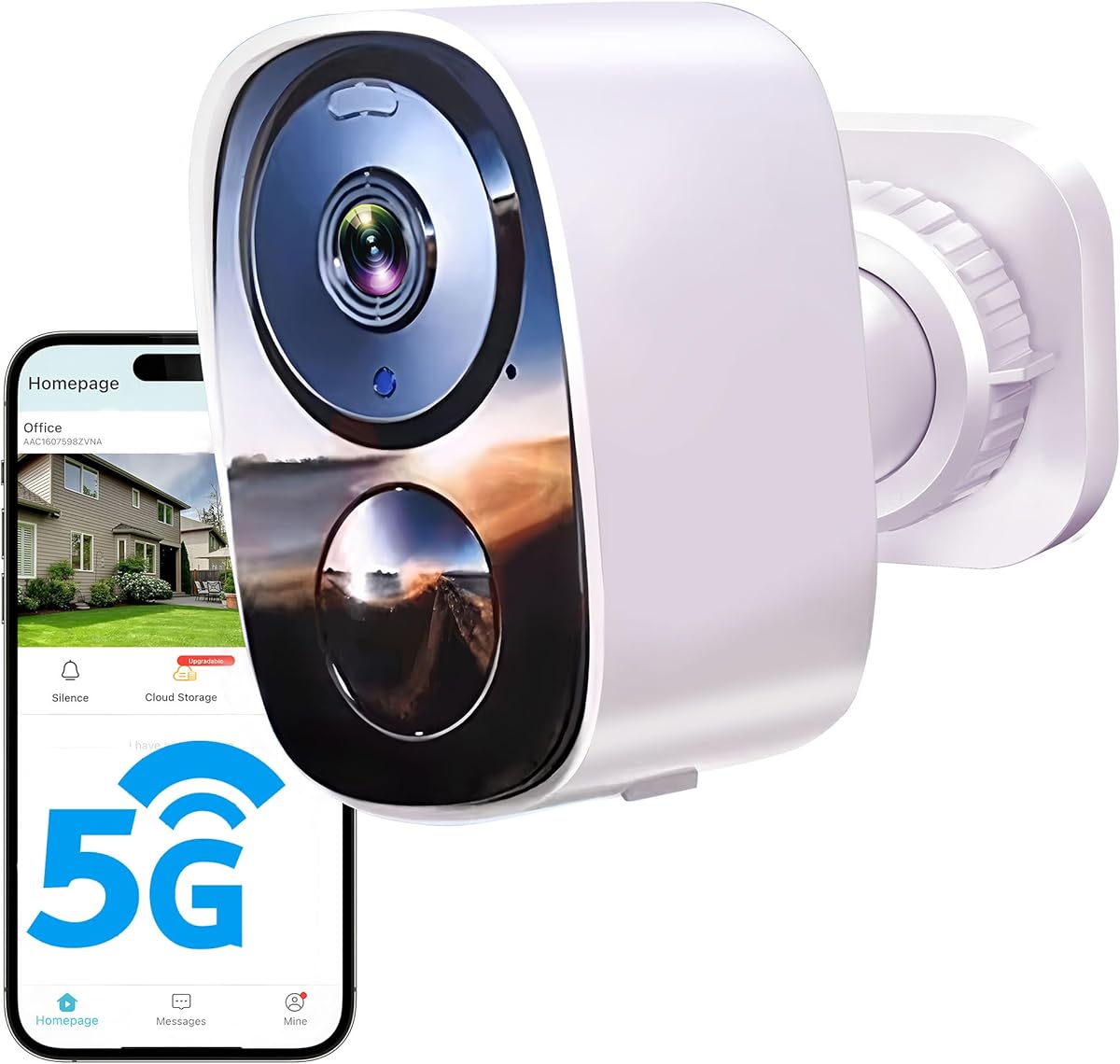


The Tapo C400 is a single outdoor wireless camera built around 1080p full HD recording, full-color night vision, and a rechargeable battery advertised for up to 180 days under typical use. Its 4.3 rating reflects generally favorable customer feedback, and its strongest appeal is the combination of simple installation, flexible placement, and useful local detection features.
We may earn a commission when you buy through this link, at no additional cost to you.
Its 5200mAh battery removes the need for a power cable at the camera location, which can be valuable around sheds, driveways, gates, and other areas where running electrical conduit is difficult. Tapo says its battery can provide roughly six months of wire-free operation based on typical usage, although real results depend on activity, recording behavior, temperature, and signal conditions. Local microSD storage up to 512GB is supported, while cloud storage is available through Tapo Care.
The principal trade-off is image resolution. At 1080p, the C400 falls below several 2K alternatives in this guide and may provide less usable detail when distant subjects occupy only a small part of the frame. It also lacks a numeric operating-temperature specification, so buyers expecting a stated minimum temperature should treat its IP65 and all-season construction claims as the available guidance.
The C400 is a compelling choice for a homeowner who wants one flexible camera with a long stated battery life, person alerts, two-way audio, and local recording. It works especially well for moderate winter monitoring where cold reduces battery performance but the camera remains accessible for occasional charging. Buyers prioritizing maximum image detail should consider one of the 2K options instead.
Battery operation makes this camera practical where a wired security camera would be costly or inconvenient to install. The stated 180-day figure is a maximum under typical-use assumptions, not a guarantee for high-traffic areas or severe winter conditions.
A microSD card up to 512GB allows local storage without relying on a recurring cloud plan. Tapo Care remains an option for users who prefer off-site access, while core person-detection features do not require a monthly subscription.
We may earn a commission when you buy through this link, at no additional cost to you.
The ANNKE 3K Lite is a wired eight-camera DVR system for users who prioritize uninterrupted recording over wireless convenience. Its 4.4 rating places it among the stronger-reviewed products in this guide, while the combination of 2MP cameras, a 3K-lite DVR, and 1TB of included storage makes it a broad whole-property solution.
We may earn a commission when you buy through this link, at no additional cost to you.
Because every camera receives continuous power through wired connections, battery drain is not a concern during cold weather. The system records 24/7 to the preinstalled hard drive, supports drives up to 10TB, and uses H.265+ compression to improve storage efficiency. AI Motion Detection 2.0 can distinguish people and vehicles, while flexible detection areas help reduce irrelevant alerts.
Its limitations come from the nature of a wired system. Installation is less flexible than with battery cameras because installers must route cables and position a recorder, potentially in a protected indoor or sheltered location. The 3K-lite label also needs careful interpretation: the supplied cameras are 1080p, and the DVR can support higher-resolution cameras at lower frame rates. The included eight cameras themselves are 2MP.
This system suits a cabin, warehouse, large yard, or perimeter where reliable continuous recording matters and professional-style cabling is acceptable. Its IP67 cameras are specified to withstand cold, heat, and rain, while the lack of a stated minimum operating temperature means location-specific confirmation remains important. For a plug-and-play battery setup, choose a wireless alternative instead.
Wired operation removes the largest cold-weather weakness of battery cameras: reduced capacity as temperatures fall. It also provides a consistent connection to the DVR, making long-term continuous recording more predictable.
The eight included cameras can cover driveways, entrances, yards, and secondary buildings without requiring separate camera purchases. Compatibility with several video formats also gives the system some flexibility for future expansion.
We may earn a commission when you buy through this link, at no additional cost to you.
The Techage 2K four-camera pack is the clearest match in the supplied lineup for buyers seeking an explicit claim of resistance to extreme cold. Its 4.4 rating is strong, and the product information specifically says the IP65 cameras can withstand rain, snow, high temperatures, and extreme cold.
We may earn a commission when you buy through this link, at no additional cost to you.
A wired power connection keeps the cameras operating continuously without a rechargeable battery whose performance can decline in low temperatures. The pack supports both 2.4GHz and 5GHz Wi-Fi, includes color night vision, and uses AI motion detection for push notifications. Two-way talk and multi-user sharing make it useful for family monitoring as well as property security.
The need to keep every camera plugged in is both a strength and a limitation. It prevents cold-related battery drain, but it also limits placement and requires access to outdoor-rated power. Recordings can be stored on a microSD card up to 128GB, although the card is not included. Cloud storage is optional and includes a 30-day free trial, while additional AI functionality depends on the selected plan.
This is a strong budget-oriented choice for a buyer who prioritizes the stated extreme-cold capability and continuous power over wireless freedom. It is particularly suitable for porches, garages, entrances, and other locations where a protected outlet or suitable power connection is available. It is less appropriate for remote corners where wiring would be expensive.
Unlike many listings that mention general outdoor use, this product explicitly includes extreme cold in its weather-resistance description. That makes the specification easier to match directly against a cold-climate requirement.
Support for both Wi-Fi bands can improve network selection, while local microSD recording offers a practical alternative to cloud-only storage. The required constant power connection should be planned before installation.
We may earn a commission when you buy through this link, at no additional cost to you.
The AlkiVision Solar camera combines 2K imaging, solar-assisted charging, an IP67 housing, and a 360-degree adjustable view in a wireless outdoor design. Its 4.6 rating is the highest supplied rating among the ten products, making it an especially attractive option for buyers who want flexible placement without running a power cable to every camera.
We may earn a commission when you buy through this link, at no additional cost to you.
The included panel continuously charges a built-in 5000mAh battery. The manufacturer states that two hours of direct sunlight per day can support operation without a manual recharge for up to 365 days under favorable conditions, while a single full charge may provide as much as six months of use. Those figures depend heavily on sunlight, motion frequency, temperature, and the amount of direct exposure received by the panel.
For nighttime monitoring, the camera offers 2304-by-1296 2K recording, color night vision, and a spotlight. AI PIR detection can identify people, vehicles, pets, and packages, although those recognition functions and cloud storage require a subscription. A siren, spotlight, two-way talk, and automatic 20-second recording add useful deterrence. The camera connects over 2.4GHz Wi-Fi and supports microSD storage up to 128GB.
The product is best for year-round outdoor monitoring in locations where sunlight can reach a solar panel and a reliable 2.4GHz network is available. Its IP67 rating and stated operation in freezing winter cold support cold-climate use, but no numeric temperature threshold is provided. For remote sites beyond Wi-Fi range, the cellular TACTACAM is a more direct solution.
The solar panel is particularly valuable where a safe electrical connection would be inconvenient. A south-facing or otherwise unobstructed placement will generally offer better charging potential than a shaded wall or north-facing location.
Instant notifications, AI detection, a spotlight, and a siren allow the camera to notify the user and discourage unwanted activity. Subscription-dependent recognition features should be considered before purchase if detailed object classification is essential.
We may earn a commission when you buy through this link, at no additional cost to you.
The 2026 Upgraded 2K camera is a wireless outdoor model offering 2K recording, full-color night vision, dual-band Wi-Fi, and a stated battery range of one to six months. Its 4.3 rating is favorable, and the generous feature set makes it a broad choice for users who want flexible placement and modern phone-based controls.
We may earn a commission when you buy through this link, at no additional cost to you.
The rechargeable battery can last as long as six months at lower motion-trigger frequency, while the supplied engineering test says a fully charged unit ran for 60 days with 100 triggers per day. The manufacturer also explicitly notes that battery performance changes with recording mode, motion frequency, and environmental temperature. That disclosure is important because cold weather can shorten usable runtime.
The camera includes AI motion detection, instant notifications, two-way audio, a spotlight, a siren alarm, and free cloud storage. Local microSD storage up to 256GB is also supported. The free cloud plan provides SD-quality footage, while HD access requires a paid plan, so users should distinguish between access and storage availability versus the quality available without a subscription.
This camera makes sense for users who want flexible 5GHz or 2.4GHz connectivity, a long claimed battery interval, and several storage choices. Its IP66 dust-and-water rating indicates outdoor readiness, but it does not provide a specific minimum operating temperature. It is best suited to locations where the camera can be recharged occasionally or where solar assistance can be added.
Supporting both 2.4GHz and 5GHz gives the camera more network options than products limited to 2.4GHz. The 5GHz band can reduce congestion in crowded wireless environments when coverage remains sufficient.
The stated maximum is a theoretical lower-use scenario, not a standard operating period. Cold temperatures, frequent motion events, and continuous recording can all reduce the time between charges.
We may earn a commission when you buy through this link, at no additional cost to you.
The Jet Black 2K camera is a compact, wire-free option with a 4.6 rating, 2K video, color night vision, and an IP65 housing. It is designed for users who want straightforward outdoor placement without the battery-management complexities of a solar system or the wiring requirements of a traditional DVR.
We may earn a commission when you buy through this link, at no additional cost to you.
Its rechargeable battery is advertised to provide between one and five months of operation per charge. Actual runtime will depend on activity, temperature, and recording habits, so a cold-weather buyer should plan for more frequent charging than the maximum figure suggests. A PIR sensor with AI analysis can recognize people, vehicles, pets, and packages and can push notifications to multiple users.
The camera includes a microphone and speaker for two-way communication, plus a siren and flashing white light for deterrence. Color and infrared night-vision modes are available, with the infrared mode listed at a 33-foot visible range. Recordings can be saved to a microSD card up to 128GB or sent to cloud storage. The card itself is not supplied.
This model is a good middle ground for porches, sheds, and small outdoor areas where a single wireless unit is enough. It also works for indoor monitoring because the same hardware supports both environments. Its key constraint is the lack of 5GHz support, so homes with congested 2.4GHz networks may need to test the signal before installation.
The included bracket and screws allow a camera to be placed on a wall or similar surface without a power connection. It is a practical option when only one or two viewpoints are needed.
The combination of color night vision, a white spotlight, and a siren gives users both recording and active deterrence options. The 33-foot infrared range provides a defined alternative for darker scenes.
We may earn a commission when you buy through this link, at no additional cost to you.
The ANNKE 16-channel system is built for larger properties that need continuous wired surveillance and substantial local storage. It includes eight 2MP cameras, a 16-channel DVR, and a 2TB hard drive, giving it the profile of a professionally planned installation rather than a quick wireless add-on.
We may earn a commission when you buy through this link, at no additional cost to you.
Its IP67 cameras are specified to withstand extreme heat, cold, and rain. That broad weather claim makes the system a credible candidate for cold outdoor areas, especially because wired power and network connections avoid the reduced battery life associated with rechargeable outdoor cameras. The DVR supports 24/7 recording, while H.265+ compression is said to save more than 50% of the space used by H.264 without losing clarity.
AI Motion Detection 2.0 distinguishes people and cars, supports custom detection zones, and offers smart playback searches. The cameras provide color night vision up to 66 feet or black-and-white infrared imaging up to 100 feet. Remote access is available through the ANNKE Vision app once the DVR is connected to a router.
The tradeoff is installation complexity. Sixteen-channel capacity provides room for expansion, but cable routing, DVR placement, and network setup demand more planning than a standalone Wi-Fi camera. The 4.2 rating is still positive, and the included storage is attractive for users who want to retain footage locally. Choose this system when reliable continuous recording outweighs the desire for simple, movable equipment.
The preinstalled 2TB drive and H.265+ compression are particularly useful for properties that must retain many days of footage. Local storage also avoids depending on a cloud connection for routine recording.
Sixteen-channel capacity means the supplied eight cameras can be complemented later as coverage needs grow. The DVR compatibility options add flexibility, provided future cameras remain compatible with the system.
We may earn a commission when you buy through this link, at no additional cost to you.
The GMK four-camera system combines wireless placement with a hybrid power option that can help in cold climates. Its 4.3 rating is favorable, and the included four cameras can be used cord-free in remote locations or connected to constant power where motion is frequent and cold temperatures could otherwise shorten battery life.
We may earn a commission when you buy through this link, at no additional cost to you.
The cameras are described as 2K 3MP devices with full-color and infrared night vision, two-way audio, a siren, and flashing white light. Smart PIR detection and AI cloud analysis generate mobile alerts and allow custom monitoring zones. One to six months of standby battery life is claimed, along with support for more than 3,000 motion triggers on a charge, although actual performance changes with use and temperature.
Storage choices include a memory card and encrypted cloud service. A seven-day free trial is offered for cloud and advanced AI features. The system also includes privacy mode and custom sleep schedules, allowing the cameras to stop recording when occupants are home and activate during specified periods. Multiple users can view live feeds and recordings.
This kit is a good option for a mixed property where some cameras can be battery-powered and others need continuous power. Its wall mounts and upright bases support both permanent outdoor placement and no-drill indoor use. The main limitation is 2.4GHz-only networking, which may be restrictive in crowded environments. It is also less appropriate for remote locations without either strong Wi-Fi or nearby constant power.
Constant power is the most practical response to reduced battery performance in freezing weather. Cordless operation remains available for areas where wiring is inconvenient or where a charger can be accessed periodically.
Custom sleep schedules reduce unnecessary recording and power use, while multi-user sharing lets household members view the system without granting full administrative control. These features add flexibility beyond basic motion alerts.
We may earn a commission when you buy through this link, at no additional cost to you.
The TACTACAM Defend 360 is the premium choice for a remote cabin, barn, gate, or other site without dependable Wi-Fi. Its 4.0 rating is the lowest in the group, but the camera addresses a distinct problem: it connects over LTE cellular, allowing remote operation without a home network or a physical internet connection.
We may earn a commission when you buy through this link, at no additional cost to you.
Solar charging keeps the built-in battery topped off, supporting an off-grid installation without a wall outlet. The camera offers remote 360-degree pan, tilt, and zoom, so one unit can inspect a wider area than a fixed camera. Photo quality is listed at 4K, video at 1080p, and motion alerts are sent directly to the phone.
The enclosure is described as weather-resistant and capable of handling rain, heat, cold, and extended outdoor exposure. This makes it relevant to cold-property monitoring, although no numeric minimum temperature is supplied. The main deployment requirement is usable cellular coverage at the installation site. Signal quality may also determine how smoothly the live stream and remote controls perform.
The Defend 360 is best for users who value independence from Wi-Fi more than maximum video resolution or multi-camera integration. Its remote control and solar design are particularly useful for isolated locations. It is less suitable for customers who want several cameras, object-classification features, or 2K recording and who have no cellular service at the property.
Cellular connectivity removes the need to extend a network cable to a remote building or create a separate internet connection. It is a strong differentiator for off-grid monitoring.
Motorized pan, tilt, and zoom lets the user redirect the camera from the app instead of installing several fixed units. This flexibility can be especially helpful for driveways, gates, and open yards.
We may earn a commission when you buy through this link, at no additional cost to you.
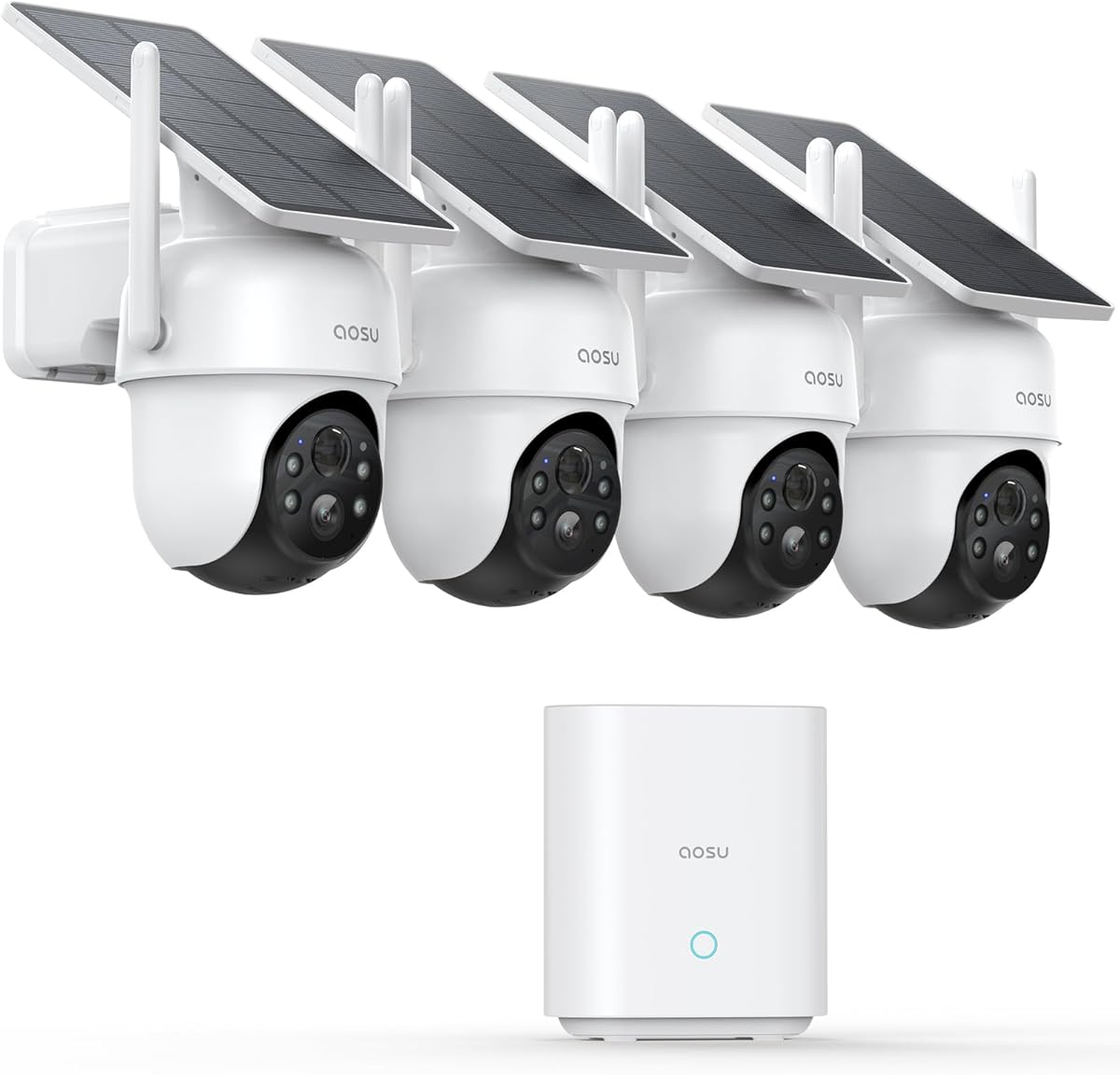
The aosu D1 Classic is a four-camera solar kit for users who want broad property coverage without a subscription for the core aosuBase experience. Its 4.3 rating is favorable, and the bundle combines integrated solar panels, pan-and-tilt cameras, local storage, and cross-camera review features.
We may earn a commission when you buy through this link, at no additional cost to you.
Each camera includes a solar panel, and the manufacturer states that three hours of sunlight daily can keep the battery running, including on cloudy or rainy days. The cameras deliver 2K resolution in the product description, with four LEDs intended to improve color night vision. Automatic motion tracking follows activity within the target area, while cross-camera tracking relates recordings from the same period for easier review.
The kit includes 32GB of local storage, which aosu says can support up to four months of loop recording. Recordings are encrypted and stored in aosuBase without a subscription, and the data can remain available even if a camera is damaged or lost. Users can also view four live areas at once and control the working status of multiple cameras from one interface.
This system is a good fit for a homeowner monitoring several exterior points where each camera can receive sufficient sunlight. Four cameras provide more comprehensive coverage than the single-camera options in this list. As with other solar systems, charging reliability depends on location and seasonal sunlight, and the supplied specifications do not state a minimum operating temperature.
The included aosuBase storage provides encrypted recording without a recurring subscription. Loop recording and cross-camera review make the kit more suitable for users who want to monitor several outdoor areas at once.
Integrated panels simplify the hardware layout, but meaningful charging still depends on unobstructed sunlight. Mounting decisions should account for snow accumulation, shade, and the reduced winter daylight available at northern latitudes.
We may earn a commission when you buy through this link, at no additional cost to you.
A cold-climate security camera should be evaluated as a complete system rather than by image resolution alone. Power reliability, ingress protection, night visibility, network reach, and realistic battery behavior determine whether it can remain useful throughout the winter.
The most useful specification is the manufacturer's stated minimum operating temperature because it tells you whether the electronics and battery are designed for the site. None of the supplied product data lists a precise minimum temperature, although several cameras explicitly mention cold or extreme cold. Buyers should therefore treat IP ratings and broad climate claims as supporting evidence rather than a substitute for a temperature figure.
Confirm the working range with the seller and manufacturer before installation. If a camera must remain exposed throughout winter, avoid assuming that a device capable of operating outdoors is automatically capable of operating at the coldest recorded temperature at the property.
An IP65 or IP67 enclosure helps protect internal electronics from dust and water, but these ratings do not mean that a camera is immune to every cold-weather hazard. Snow can block a lens, ice can accumulate around a mount, and repeated freeze-thaw cycles may affect seals or moving parts. The angle of the camera and the location of its solar panel are as important as the housing specification.
Choose a model with an explicit IP rating, prefer a sealed housing, and keep the lens clear of accumulated snow. For wired systems, protect connectors and the recorder from moisture just as carefully as the outdoor cameras.
Rechargeable batteries generally lose usable capacity in cold conditions, and low temperatures can also slow charging. Advertised runtimes often assume moderate temperatures, infrequent motion, and power-saving behavior. A six-month maximum may become a much shorter interval in a busy driveway during a prolonged freeze, particularly if the camera is mounted outdoors and exposed to wind.
For high-traffic locations, continuous wired power is the most dependable choice. For remote locations, plan regular charging or use a solar panel positioned for the best available winter sunlight. Treat maximum battery life as a laboratory-style estimate rather than a calendar guarantee.
Solar cameras remove the need for routine manual charging, but they depend on sunlight rather than temperature alone. Winter cloud cover, shorter days, snow on the panel, and surrounding obstructions can all reduce charging. The AlkiVision and aosu systems claim strong operating periods under favorable sunlight, while the GMK system offers a hybrid constant-power option for demanding locations.
Choose a solar direction that maximizes direct exposure, keep the panel clear of snow, and check that a charging indicator is visible. Do not position the panel where an overhang, tree, or roof can create long winter shadows. Wired power remains a useful supplement when low temperatures significantly reduce battery performance.
Wi-Fi range can change substantially when walls, metal structures, snow buildup, and distance are involved. Some listed cameras support both 2.4GHz and 5GHz, while others operate only on 2.4GHz. The broader dual-band support can help with congestion, while 2.4GHz generally offers better long-range propagation. Cellular service is the appropriate choice for a remote site without a home network.
Test the intended connection before mounting equipment permanently. Pay particular attention to the video feed, alert delivery, and remote-control responsiveness rather than checking only whether a phone can see the access point. Remote cellular products also need reliable signal at the actual camera location.
Cold environments often have long dark hours, snow, and reflective surfaces that affect nighttime recordings. Color night vision can make activity easier to identify, while infrared illumination provides a defined monochrome range. Spotlight-equipped models can also serve as visible deterrents, and two-way audio gives the user a way to respond to visitors or delivery personnel.
Compare the stated night-vision range with the size of the area you want to cover. A 33-foot infrared range may be sufficient for a porch but not a large driveway. Check whether white lights can be disabled, since continuous illumination may attract attention or affect wildlife.
Local storage is often the most practical choice for long-term recording because it does not depend on an internet connection or a recurring cloud plan. DVR systems provide continuous recording, while memory-card cameras are better suited to event-based clips. Cloud storage can add convenience and off-site access, but some advanced AI and high-quality recording features require a subscription.
Check the supported card capacity, whether the card is included, and how loop recording behaves. For a DVR, compare the included drive capacity, compression method, and maximum expansion. Users who need searchable person and vehicle identification should also verify whether the relevant feature is included or subscription-based.
A single camera may be enough for one doorway, but larger properties generally benefit from several viewpoints. Wired DVR kits and four-camera systems simplify coordinated coverage, while pan-and-tilt models can cover more ground from one mount. Solar and cellular options are especially useful for gates, barns, cabins, and other locations that are difficult to connect to power.
Map every priority area before buying, including approach routes, delivery points, outbuildings, and blind spots. Consider whether the cameras need to work together, whether one app can manage them, and whether expanding the system later will require another hub, base station, or separate account.
Begin by testing the camera indoors or in a protected location before exposing it to winter conditions. Charge the battery fully, update the firmware through the manufacturer app, connect it to the intended network, and confirm that live video, motion alerts, night vision, two-way audio, and recording all work as expected. This reduces the likelihood of leaving a poorly configured camera exposed for weeks without checking it.
Mount each camera where it has a clear view and protected cable routes, but not so tightly against a wall that condensation, snow, or mounting vibration can affect the image. Angle outdoor cameras downward slightly to limit rain and snow buildup on the lens. For solar cameras, position the panel for maximum unobstructed sunlight and inspect it for snow or ice during and after winter storms.
Develop a regular inspection and maintenance routine. Clean the lens gently, check that seals and mounts remain secure, confirm that storage is recording, and review battery levels before the coldest part of the season. Do not use a high-pressure washer or harsh chemical cleaner, because these can damage coatings and seals. For wired systems, keep connectors dry and make sure the DVR or recorder is installed in a protected, ventilated location.
A camera can be installed outdoors in cold conditions, but it should have a stated weather rating and suitable operating-temperature range. The products in this guide use IP65 or IP67 protection, and several specifically mention cold or extreme cold in their supplied descriptions. Because most do not provide a precise minimum temperature, check the manufacturer specifications for the exact model and installation site before relying on it throughout winter.
Yes, cold temperatures can reduce rechargeable battery capacity and make charging slower. The effect becomes more significant with frequent motion detection, outdoor exposure, and continuous recording. Wired power is the most dependable option in busy locations, while solar-assisted cameras and regular winter charging checks can help reduce the inconvenience. Maximum battery-life claims should be treated as favorable-use estimates rather than guaranteed cold-weather runtimes.
A higher IP rating generally provides stronger protection against dust and water, which is valuable in snow, sleet, and freezing rain. IP67 is the strongest rating listed in this guide, while IP65 and IP66 are also common outdoor options. An IP rating does not specify the minimum operating temperature, so it should be considered alongside the manufacturer's cold-weather claims.
They can be, provided the panel receives adequate sunlight and remains clear of snow. Winter days are shorter, and cloud cover or accumulated snow can reduce charging, so cold regions may need conservative placement and periodic checks. The AlkiVision and aosu kits include solar charging, while the GMK system can also accept constant power for locations where battery reliability is critical.
The TACTACAM Defend 360 is the clearest option in this list because it uses LTE cellular service rather than a home network. It also has solar charging and remote pan, tilt, and zoom. It does require usable cellular coverage at the installation site, so verify the signal and carrier compatibility before purchasing.
It is helpful when subjects are distant or when details must be reviewed after an incident, but resolution alone does not determine camera usefulness. Night vision, motion detection, field of view, storage, and reliable power are equally important. A 1080p model may be adequate for a close porch view, while a driveway or large property can benefit from the additional detail of 2K or 3MP sensors.
Not necessarily, but wired systems avoid the most visible cold-weather weakness of battery cameras. They also support continuous recording and make long-term operation more predictable. Wireless and solar cameras are more convenient for remote or retrofit installations, provided the installer accounts for battery capacity, charging access, sunlight, and Wi-Fi coverage.
Condensation can occur when a cold camera is brought into a warm, humid room, or when warm moist air reaches a cold enclosure. Avoid opening or changing the camera indoors immediately after bringing it from freezing conditions. Seal the housing, keep vents unobstructed, and allow acclimation before servicing the unit to reduce the risk of internal moisture.
The AlkiVision solar camera is the most versatile wireless option in the group, combining 2K color night vision, an IP67 housing, solar charging, and flexible coverage. The TACTACAM Defend 360 stands out for isolated properties that have cellular service but no Wi-Fi, while the Techage four-camera pack offers an explicit extreme-cold claim, IP65 protection, and continuous wired power at a budget-friendly level.
For a large property with reliable cabling, the ANNKE systems provide eight cameras, continuous DVR recording, local storage, and IP67 housings. GMK users gain hybrid power flexibility, and the aosu D1 Classic combines four solar cameras with subscription-free local storage. Prioritize the operating-temperature evidence, power architecture, network availability, and night-vision range that match your property rather than selecting on resolution alone.
Before making a final purchase, verify the current specifications, regional compatibility, storage terms, and availability of any required subscription. Prices and promotions can change over time, and current product pages may contain updated versions or revised operating information. Checking those details before ordering helps ensure that the camera, power system, and installation location are properly matched for the coming winter.